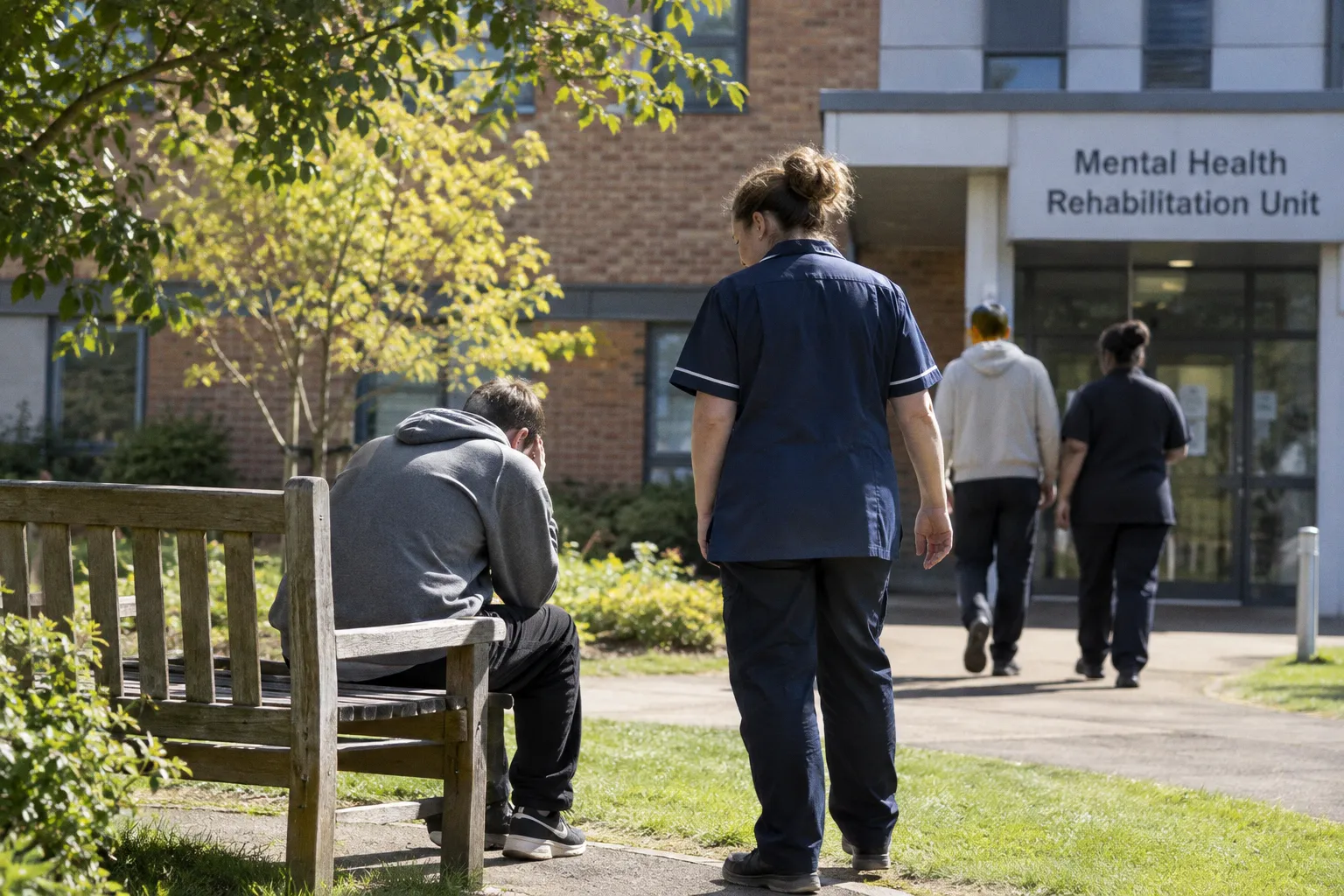
The Care Quality Commission (CQC) subsequently rated the unit inadequate and placed it in special measures. For patients and families choosing or reviewing inpatient rehabilitation, the case shows that clinical access is only one part of safety: governance, rights communication, staffing and the physical environment also require scrutiny.
A breakdown across care, rights and oversight
Pine House patients told inspectors they saw psychiatrists for only 10 minutes a month, sometimes by video call. All patients who spoke to the CQC said they lacked sufficient access to psychiatric care and felt their concerns were not acted upon.
The inspection also identified problems with community leave. Some patients said leave had been stopped without a clear explanation. In one case, a patient remained on leave at a care home for six months, although the arrangement was intended to last one week. The CQC attributed this to poor information sharing and communication between services.
These are not minor administrative defects. For a rehabilitation unit, the transition between ward-based care and community support is part of the treatment structure. If responsibilities are unclear, the patient may lose both continuity and an understandable route toward discharge.
The CQC also found a high level of long-term segregation and restraint. Inspectors said this should not occur regularly in a community rehabilitation hospital. They reported that leaders lacked the skills, knowledge or experience to run the service effectively, and that Pine House had no registered manager in place since November 2023.
The regulator further identified concerns about Mental Health Act requirements. Medicines had reportedly been given without relevant consent or a second opinion, while patients’ rights were not always explained clearly, including the conditions they needed to meet before leaving the service.
What patients and families should verify
The report does not establish that every patient received the same level of care. It does establish a pattern of systemic weakness at this unit. Krinvest Care Group, whose registered operator is Kibo Hospital Service Ltd, said it had taken the findings seriously and had introduced improvements. The CQC has begun regulatory action, and the operator has the right to appeal.
For anyone assessing a mental health ward or rehabilitation service, the practical questions are specific.
Ask how often a patient will see a psychiatrist, and whether appointments are in person or remote. Ask who records decisions about leave, what the review process is, and how the patient is told why leave has been restricted. Request clarity about the named clinician or manager responsible for the care plan.
Patients and families should also ask how medication decisions are documented, how consent is obtained, and what process applies when consent or a second opinion is required. Where a person is detained under mental health legislation, the service should be able to explain the patient’s rights in terms they can understand.
The central issue is not whether a ward appears calm during a visit. It is whether the service can demonstrate a functioning chain of responsibility. A patient needs to know who makes decisions, when those decisions are reviewed, and how concerns are escalated.
The physical environment is part of clinical safety
The inspection found the building itself unsafe. Inspectors contacted the local fire service because fire doors were missing, and 45 doors were described as damaged beyond repair or in need of significant repair.
Krinvest said immediate fire-safety concerns had been addressed during the inspection and that work required by Lancashire Fire and Rescue Service had since been completed. The group also said further measures were in place to address other concerns. Inspectors noted that patients spoke warmly about ward staff, indicating that positive relationships with individual carers did not remove the wider failures in leadership and infrastructure.
That distinction matters. A service can contain committed staff while still operating within an inadequate system. For patients, the relevant assessment is therefore broader than rapport with a therapist or nurse. It includes clinical access, documentation, legal safeguards, staffing stability, leave procedures and basic building safety.
Special measures mean the CQC will monitor Pine House closely and set a timeframe for improvements. The useful test will be whether those changes produce measurable improvements in access, communication, rights protection and discharge planning. Until then, the case is a reminder that treatment quality is not defined by therapeutic intent alone. It depends on whether the institution can reliably deliver the conditions under which treatment is possible.